
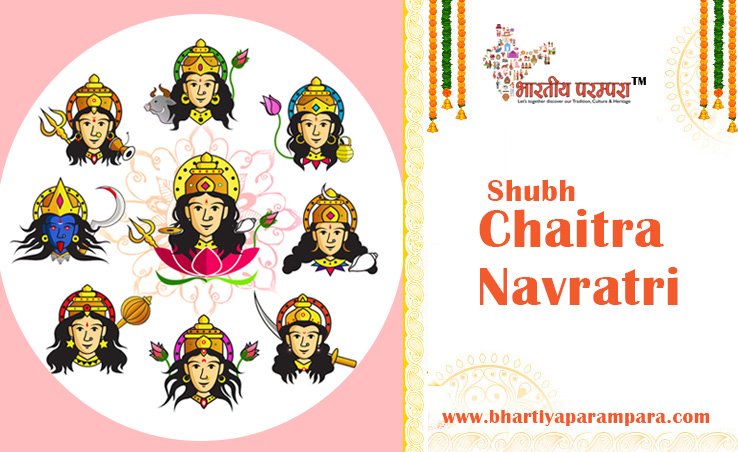
This festival will be celebrated with great pomp for nine days. During these nine days, grand worship of nine different forms of Mata Rani is done. According to the popular beliefs in Hindu religion, Maa Durga was born on the first day of Chaitra Navratri and it was at the behest of Maa Durga that Lord Brahma created the universe. That is why the Hindu year starts from Chaitra Shukla Pratipada. In many places it is also called Gudi Padwa. On the third day of Chaitra Navratri, Lord Vishnu established the earth by taking the first incarnation in the form of Matsya. After this, the seventh incarnation of Lord Vishnu, that of Lord Rama, also took place on the Navami day of Chaitra Navratri. Therefore, Chaitra Navratri has great importance from the religious point of view.
By observing the fast as per the rules from the night of Amavasya to Ashtami or from Gudi Padwa to the afternoon of Navami, the name 'Navratri' is meaningful for nine nights. Since nights are counted here, it is called Navratri i.e. a group of nine nights. From this day many people keep a fast for nine days or two days.
Navratri comes four times a year. In which Navratri of Chaitra and Ashwin have special significance. Vikram Samvat starts from Chaitra Navratri. These days a special kind of power emanates from nature. To absorb this power, there is a tradition of worshiping Shakti Puja or Navdurga during these days. In this, nine powers of Mother Goddess are worshiped on different days.

1. Mother Shailputri - The first form of Maa Durga is Shailputri. Shail means peak. According to religious scriptures, Goddess Shailputri is the daughter of Mount Kailash, that is why Goddess Shailputri is also called the daughter of the mountain. Since Vrishabha (bull) is his vehicle, he is also known as Vrishabharudha. He has a trident in his right hand and a lotus in his left hand. The real meaning of this form of mother is the highest place of consciousness.

2. Mother Brahmacharini - Mother Brahmacharini is worshiped on the second day of Navratri festival. Brahma means penance and Charini means one who conducts. Thus Brahmacharini means one who practices penance. Mother Durga was born as Parvati as the daughter of Parvatraj and at the behest of Maharishi Narad, she performed severe penance to get Lord Mahadev as her husband. Because of her rigorous penance for thousands of years, she was named Tapascharini or Brahmacharini. During his period of penance, he pleased Mahadev by fasting for many years and performing extremely difficult penance. Mother Brahmacharini has a rosary in her right hand and Kamandal in her left hand.

3. Mother Chandraghanta - Mother Chandraghanta is worshiped on the third day of Navratri. This goddess has an hourglass shaped half moon on her head. That is why this goddess has been called Chandraghanta. The color of their body is very bright like gold. This goddess has ten hands. They are adorned with swords and other weapons. The posture of this goddess riding on a lion is to be ready for war. The tyrannical demons and demons keep trembling due to their terrible bell-like sound.
This form of the Goddess is extremely peaceful and beneficial. That is why it is said that we should continuously do sadhana keeping in mind his sacred idol. His meditation is beneficial and gives salvation for both our world and the next world.

4. Mother Kushmanda - On the fourth day of Navratri, the fourth form of Goddess Durga, Goddess Kushmanda is worshipped. Kushmanda means pumpkin. Mother likes the sacrifice of Kumhra the most among the sacrifices. That is why she is called Kushmanda Devi. Mother Kushmanda is also called Ashtabhuja. Because Maa Kushmanda has eight arms which include kamandal, bow and arrow, lotus flower, conch, chakra, mace and the chanting rosary which bestows all siddhis. Apart from all this, mother also has Amrit Kalash in her hand. Mother Kushmanda's rider is a lion.

5. Mother Skandamata - This goddess is worshiped on the fifth day of Navratri. Because she was the mother of Skanda Kumar Kartikeya, she has been named Skandamata. In his idol, Lord Skanda is seated in his lap in child form. Their complexion is very fair. This goddess has four arms. He is holding Skanda in his lap with his upper right arm. There is a lotus flower in the lower arm. On the left side, the upper arm is in Varadamudra and the lower arm has a lotus flower. That is why it is also called Padmasana. Leo is their vehicle. Skandamata, who creates new consciousness in worldly creatures by living on the mountains. It is said that by his grace even a fool becomes wise.

6. Mother Katyayani - On the sixth day of Navratri, Maa Katyayani, the sixth form of Mother Durga, the creator of the world, is worshiped and worshipped. It is mentioned in Skanda Purana that she was born from the natural anger of God, who killed Mahishasura by riding on the lion given by Goddess Parvati. She is the original form of Shakti, which is mentioned in Patanjali's Mahabhashya on Panini. Maa Katyayani is traditionally associated with the color red like Goddess Durga. He is worshiped on Shashthi of Navratri festival. On that day the mind of the seeker is situated in 'Ajna Chakra'. This Ajna Chakra has a very important place in Yoga Sadhana. The seeker with his mind situated in this chakra offers his everything at the feet of Mother Katyayani. Such devotees who make complete self-sacrifice easily get the darshan of the Mother Goddess.

7. Mother Kalratri - On the seventh day of Navratri, Maa Kalratri, the seventh form of Mother Durga, the mother of the world, is worshiped and worshipped. The color of mother's body is completely black like dense darkness. The hair on the head is scattered. There is a garland around the neck that shines like electricity. He has three eyes. These three eyes are round like the universe. Bright rays like electricity keep emanating from them. Fierce flames of fire keep coming out from the breath of the mother's nostrils. His vehicle is Gardabha (Donkey). She grants boons to everyone with the Varamudra of her right hand raised up. The lower hand on the right side is in Abhayamudra. There is an iron hook in the upper left hand and a dagger in the lower hand.
The form of Maa Kaalratri is very scary to look at, but she always gives auspicious results. For this reason, one of their names is 'Shubhankari'.
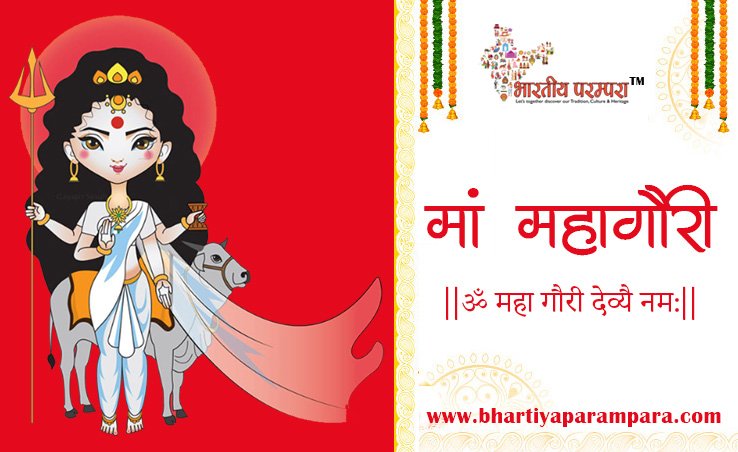
8. Mother Mahagauri - On the eighth day of Navratri, Mother Mahagauri, the eighth form of Mother Durga, is worshiped and worshipped. Mother's character is completely fair. This importance has been compared to the conch, the moon and the lotus flower. His age is considered to be eight years - 'Ashtavarsha Bhaved Gauri.' All their clothes and jewelery etc. are also white. Mother Mahagauri has four arms. His vehicle is Taurus. He has Abhaya Mudra in his upper right hand and Trishul in his lower right hand. There is Damru in the upper left hand and Var-Mudra in the lower left hand. His posture is very calm. In the form of Mahagauri, the Goddess looks compassionate, affectionate, calm and gentle.

9. Mother Siddhidatri - On the ninth day of Navratri, there is a tradition of worshiping and worshiping Maa Siddhadatri, the ninth form of Goddess Durga. As it is clear from her name itself, Maa Siddhidatri is the goddess who grants all kinds of achievements. He has four hands and is seated on a lotus flower. By the way, his vehicle is also a lion. He has a chakra in his lower right hand and a mace in his upper hand. There is a lotus flower in the lower left hand and a conch in the upper hand. In the ancient scriptures, eight siddhis named Anima, Mahima, Garima, Laghima, Prapti, Prakamya, Ishitva, and Vashitva have been mentioned. These eight Siddhis can be achieved by the worship and grace of Mother Siddhidatri.
After worshiping and fasting for nine days of Navratri, Parana (conclusion) of Navratri and fast is done by feeding the girls on Navami. We celebrate the last day of Navratri as the birth anniversary of Lord Rama. In this way, the glory of the nine forms of Mother Goddess for nine days is unique. Best wishes to all of you on the occasion of Chaitra Navratri. May Mother Goddess bring immense happiness in the lives of all of you.


Login to Leave Comment
LoginNo Comments Found
Related Articles
Aadi Perukku | Monsoon festival in Tamil Nadu
Why is there Adhik Maah | Mythological base of Adhik Maas
Significance of Daan traditions in Adhik Maas | Purshotam Maah
Ahoi Ashtami Vrat | Ahoi Mata | Ahoi Ashtami Vrat Katha
Akshaya Tritiya | Why is Akshaya Tritiya celebrated? | What is the significance of Akshaya Tritiya?
Ugadi Festival | Why we celebrate Ugadi Parv?
Vakratundi Chaturthi | Til Chauth | Sankat Chauth
Tejadashmi Parv | Teja Ji Festival
Why do we celebrate Basant Panchami | Basant Panchami Festival | Importance of Basant Panchami
Beawar's historic Badshah Mela (fair) | Beawar City
How the tradition of celebrating Bhai Dooj started | Bhai Dooj story and significance | Why we celebrate bhai dooj
Chaitra Navratri Festival| Chaitra Navratri
Why do we celebrate the festival of Chetichand? | Jhulelal Jyanti
Sharad Purnima Vrat Katha | Puja Vidhi
Importance of Sharad Purnima | Goddess Laxmi
Why Chhath Puja festival is celebrated | Who started Chhath Puja Tradition? | Chhath Puja
Why is Satudi Teej worshiped with a sprig of neem? | Satudi Teej
Importance of Narak Chaturdashi, Kali Chaudas, Roop Chaudas, Chhoti Diwali or Narak Nivaran Chaturdashi| Why Narak Chaturdashi Called Roop Chaudas
Sajibu Nongma Panaba | Sajibu Nogama Penaba Festival
Rishi Panchami | Maheshwari Rakshabandhan
Dahi Handi | Why and how is Dahi Handi celebrated?
Jagannath Puri Rath Yatra | Odisha | Lord Krishna
Ramdev Jayanti | Ramdev Pir Baba | Marvad Ra Ramdevra
Know why Dev Diwali is celebrated | Dev Diwali | How the tradition of celebrating Dev Diwali started
Rakshabandhan | What is the logic behind Rakhi festival?
Do not do this work during Shradh Paksha | Pitru Paksh
What is the Ancient Story of Pitra Paksha| Pitru Paksh Katha
Onam Festival | History and Importance of Onam Festival
How often does Navratri come in a year | Importance of Navaratri
Makar Sankranti | Solstice
Navratri Day 5 : Worship of Maa Skandmata, fasting stories, mantras, aarti, bhog and prasad | Maa Skandmata in Navaratri
Navratri Day 9 : Worship of Maa Siddhidatri, fasting stories, mantras, aarti, bhog and prasad | Maa Siddhidatri in Navaratri
Navratri Day 1 : Worship of Maa Shailputri, Vrat Katha, Mantra, Aarti, Bhog and Prasad | Maa Shaiputri in Navaratri
Navratri Day 8 : Worship of Maa Mahagauri, fasting stories, mantras, aarti, bhog and prasad | Maa Maha Gauri in Navaratri
Navratri Day 4 : Worship of Maa Kushmanda, Vrat Katha, Mantra, Aarti, Bhog and Prasad | Maa Kushmanda in Navaratri
Navratri Day 6 : Worship of Maa Katyayani, fasting stories, mantras, aarti, bhog and prasad | Maa Katyayani in Navaratri
Navratri Day 7 : Worship of Maa Kalratri, fasting stories, mantras, aarti, bhog and prasad | Maa Kalratri in Navaratri
Navratri Day 3 : Worship of Maa Chandraghanta, fasting stories, mantras, aarti, bhog and prasad
Navratri Day 2 : Worship of Maa Brahmacharini, Vrat Katha, Mantra, Aarti, Bhog and Prasad | Maa Bramhacharini in Navaratri
Importance of Labh Panchami | Saubhagya Panchami
Karva Chauth Vrat | Why the moon and husband's face are seen in the sieve?
Importance of bathing rituals on Kartik month | Kartik Maah Vrat
How to do ghatasthapana in Shardiya Navratri ? | Kalash Sthapna in Navaratri
Paryushan Parva : Why, When and How is it Celebrated?
Traditions of Holi Festival | How to celebrate Holi
Why do we celebrate Holi? | Importance of Holi Festival
Importance of Hartalika Teej Vrat | Why do hartalika fast?
Guru Purnima | Why is the Poonam of Ashadh celebrated on Guru Purnima?
Why do Gupt celebrate Navratri? | Importance of Gupt Navratri | Gupt Navratri
Why do Govardhan worship? | Why We Celebrate Govardhan or Annakut (Annakoot) Festival
Know why Ganesh ji is called "Ganpati Bappa Morya"? | Ganapti Bappa Morya | Gajanana
How to do Gangaur fast and worship| Gangaur Puja
Ganesh Immersion on Anant Chaturdashi | Ganapati Visarjan
Why do Ganesh Utsav celebrate? | Ganesh Chaturthi
Parivartini Ekadashi | Vaman Jayanti | Impotance of Parivartini Ekadashi
Why we Celebrate Dussehra, Vijaya Dashmi and Aayudh Puja
Measures to be taken on Deepawali | Diwali | Laxami Pujan
Deepawali Puja Vidhi and Puja Stuff | Diwali Puja | Method of Worshiping Laxmi
Why do you celebrate Deepawali? | Diwali Festival of Light
Different ways to celebrate Holi | Holi Colorful Festival
Why the festival of Dhanteras is celebrated? | Dhanteras | Who is the God Dhanvantari?
Kripa kerhu gurudev ki nayi | Hanuman Jyanti
Vat Savitri Vrat | Importance of Vat Savitri Vrat
Mahalakshmi - Festival of Maharashtra
Diwali - Rama Sama | Diwali Festival | How to Celebrate Diwali
Maha Shivratri | Shiv Ratri
Gudi Padwa | Marathi New Year
Pandharpur Wari | Lord Vitthala | Maharashtra
Rama's Shakti Worship and Navratri Begin
Nirjala Ekadashi | Nirjala Ekadashi Katha
Importance of Gupt Navratri
Hariyali Amavasya
Devshayani Ekadashi | Padma Ekadashi
Shri Govardhan Puja and Prakatya | Mathura | Lord Krishana
Shri Govardhan Puja and Annakut | Mathura | Lord Krishana
Jaya Ekadashi | Significance of Jaya Ekadashi
Mokshada Ekadashi Vrat | Geeta Jyanti
Paush Putrada Ekadashi | Paush Putrada Ekadashi Puja Samgri
Shatila Ekadashi | Meaning of Shatila
Significance of Mahashivratri | Maha Shivratri Fasting | Lord Shiva
Mahari Gangaur| Gangaur Puja I Gangaur Vrat
Holika Dahan Festival | Holi colors with life
Sheetla Saptami / Basoda Puja | Sheetla Saptami Puja
Importance of Gupt Navratri
Hariyali Amavasya
Nirjala Ekadashi | Nirjala Ekadashi Katha
Rama's Shakti Worship and Navratri Begin
Makar Sankranti Parv | Festival of Nature | Kite Festival
Maha Shivratri | How to worship Shiva | Twelve Jyotirlingas
Gangaur Festival is celebrated to maintain good fortune
Akshaya Tritiya is a Fruitful Festival
Marriage of Shri Ram Sita | Vivah Panchami
Pongal Festival | How to celebrate Pongal
Hanuman Jayanti | How to Celebrate Hanuman Jayanti
Guru Purnima | Significance of Guru Purnima | Meaning of Guru
Birthday of Goddess Radha | Radhashtami Worship Method
Pola Pithora (Pola) - the important festival of farmers in Maharashtra
Marabat Festival | Marbat - Nagpur's Marbat Festival
Importance of Chaitra Navratri
Vat Savitri Vrat
What is Shraadh? | How do Pitras attain Shraddha?
Paryushan Parva : Why, When and How is it Celebrated?
Why do Govardhan worship? | Why We Celebrate Govardhan or Annakut (Annakoot) Festival
Importance of Anant Chaturdashi | Worship of God Vishnu
The Thread of Trust - Rakshabandhan
Hartalika Teej : Vrat Katha, Puja Vidhi, Significance
Durga Puja: A Celebration of the Victory of Good and Cultural Heritage
Our Folk Festival - Sanjhi Mata or Chanda Taraiya
Sindur Khela
Why do women view the moon through a sieve on Karwa Chauth?
The Beginning of Diwali - Dhanteras
Involve Children in the Country's Culture and Traditions During Diwali
Nag Panchami | नाग पंचमी
Krishna Janmashtami – Significance, Story & Celebrations
Rishi Panchami – A Sacred Thread of Tradition and Love
From Mahalaya to Chhath Puja – The Spiritual Journey of Indian Festivals
Akshaya Navami: Festival of Nature Worship and Amla Tree Rituals
Dev Uthani Ekadashi – A Day of Auspicious Beginnings
Saphala Ekadashi Vrat: The Auspicious Day of Fulfillment and Blessings
Sankat Chauth Vrat – Significance, Story, and Rituals in Hindu Tradition
Traditional Holi Songs and Rasiya – A Colorful Musical Heritage
Akshaya Tritiya: Auspicious Day, Significance, Rituals & Story | अक्षय तृतीया
From Devotion to Science: The Multifaceted Significance of Hartalika Teej
Resham Ki Dor | Raksha Bandhan: Festival of Love, Protection & Eternal Bond
Balram Jayanti : Significance of Hal Shashti & Chandra Chhath
Pitru Paksha: Tradition and importance of Shraddh
Sharad Purnima Significance & Rituals
Deepotsav: A confluence of culture, sociality and science
Jitiya Vrat Katha – Sacred Festival for Child's Long Life
Sheetala Saptami Vrat Katha, Puja Vidhi, Importance
Anant Chaturdashi Vrat Katha, Puja Vidhi, 14 Knots Mystery
Raksha Bandhan in South India: Tradition, Change & Cultural Unity
Maha Shivaratri: Meaning, Rituals, Story & Significance
Vedic Holi: Tradition, Legends & Scientific Wisdom
Nav Samvatsar 2025: Hindu New Year, Significance, History, and Celebrations
Varuthini Ekadashi 2025 – Significance, Vrat Rules & Story
Akshaya Tritiya & Parshuram Jayanti: Significance, Legend and Celebration
Shravan Maas – Worship, Significance & Rituals of Mahadev in Monsoon Month
Ganesh Utsav: Spiritual Meaning, Mahabharata Origin & Modern Revival
Navratri's Kolu/Golu: A Confluence of Tradition and Modernity
Bhai Dooj | History, Significance, and Celebration of Yam Dwitiya
Mahavir Swami Jayanti: Teachings, Panchsheel, and the Eternal Message of Non-Violence
Buddha Purnima 2025: Significance, Teachings & Rituals
Celebrating the transition of seasons - Holi | Festival of Colors, Love & Spiritual Joy
Holi Ki Bhai Dooj – The Festival of Eternal Sibling Love
Dhanteras: A Festival of Empathy, Not Just Prosperity
Lohri Festival: Significance, Traditions, and Cultural Importance in India
Shattila Ekadashi Fast: Significance, Puja Vidhi, Katha & Sesame Remedies
Sawan in Sikh Barahmaha | Spiritual Meaning & Divine Union
Snakes in Indian Culture: Significance of Nag Panchami, Ecological Importance & Snake Conservation
Significance of Bodh Gaya During Pitru Paksha | Pind Daan & Moksha
What is Jivachhraddh? Rules & Beliefs of Self Pind Daan in Gaya
Pitru Paksha & Crows: Spiritual Meaning & Environmental Impact
Durga Puja and Bengal's Cultural Heritage: History, Art & Traditions
Karwa Chauth: Why a Wife Is the Family’s Strongest Pillar | Karwa Chauth Special
Writer’s Other Articles
Bhai Dooj | History, Significance, and Celebration of Yam Dwitiya
Ganesh Utsav: Spiritual Meaning, Mahabharata Origin & Modern Revival
Akshaya Tritiya & Parshuram Jayanti: Significance, Legend and Celebration
Why do women view the moon through a sieve on Karwa Chauth?
Yoga keeps you healthy
Importance of Chaitra Navratri